SMP
| Read about why the future of mobility in cities extends beyond a single Mobility Hub
Read more
| Read about why the future of mobility in cities extends beyond a single Mobility Hub
Read more


Cities across Europe face a growing challenge. As e-commerce, home deliveries and urban services continue to expand, more vehicles are entering city centres every day. While these services are essential to residents and businesses, they also contribute to congestion, pressure on public space and increased emissions.
The question for many municipalities is clear: how can cities remain accessible while creating cleaner, safer and more liveable urban environments? Part of the answer may already exist within the city itself.
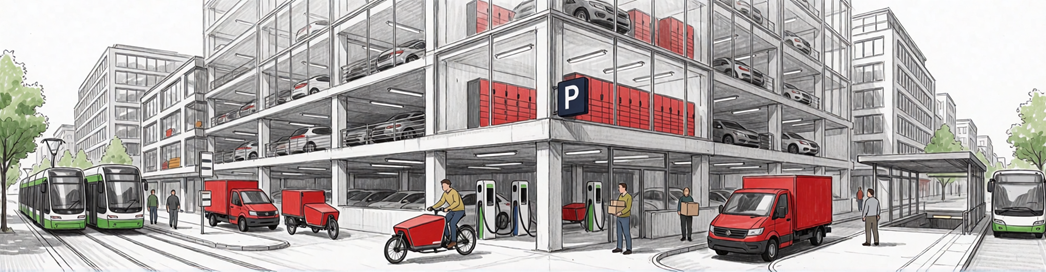
Mobility Hubs are often associated with parking, EV charging and connections to public transport. Increasingly, however, they are demonstrating their value as strategic locations for urban logistics.
Located close to city centres and key destinations, Mobility Hubs offer vital infrastructure to support more sustainable and efficient delivery operations. Rather than adding new urban logistics facilities to already crowded urban areas, cities can make smarter use of infrastructure that is already in place.

The final part of a delivery journey, often referred to as the "last mile", is typically the most complex and resource-intensive. Congested streets, limited loading space and environmental restrictions can make urban deliveries increasingly challenging.
Mobility Hubs can help address these challenges by providing space for activities such as:
By consolidating deliveries closer to their final destination, logistics providers can reduce unnecessary vehicle movements and improve operational efficiency.

Creating more sustainable urban logistics requires collaboration between municipalities, mobility providers, logistics operators and infrastructure partners. As a Sustainable Mobility Partner, Q-Park believes that vital mobility infrastructure can play an important role in supporting both the movement of people and the movement of goods. Our Mobility Hubs can evolve into multifunctional infrastructure and contribute to accessibility, economic vitality and liveability.

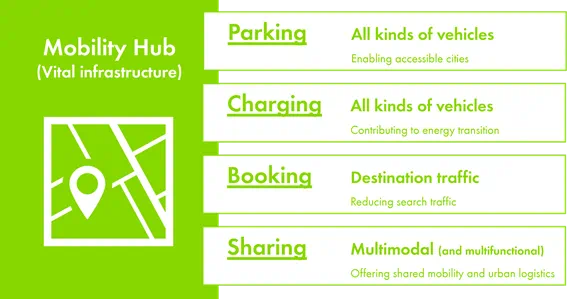
The future city requires infrastructure that serves multiple purposes. Parking, charging, shared mobility and public transport connections, and urban logistics (last mile) solutions to help cities operate more efficiently and sustainably.
By making smarter use of existing infrastructure, cities can reduce pressure on scarce public space while ensuring that residents and businesses continue to receive the services they depend on.
Because the future of urban mobility is not only about moving people efficiently. It is also about moving goods in smarter, cleaner and more sustainable ways.
Q-Park – Sustainable mobility solutions
Q-Park – Seamless parking services